Community Projects Yield Open-Source Utilities for Calibrating Refresh Rates on Legacy Monitors in Resource-Constrained Competitive Gaming
Avery Schmitt · Sep 25, 2026
Community Projects Yield Open-Source Utilities for Calibrating Refresh Rates on Legacy Monitors in Resource-Constrained Competitive Gaming
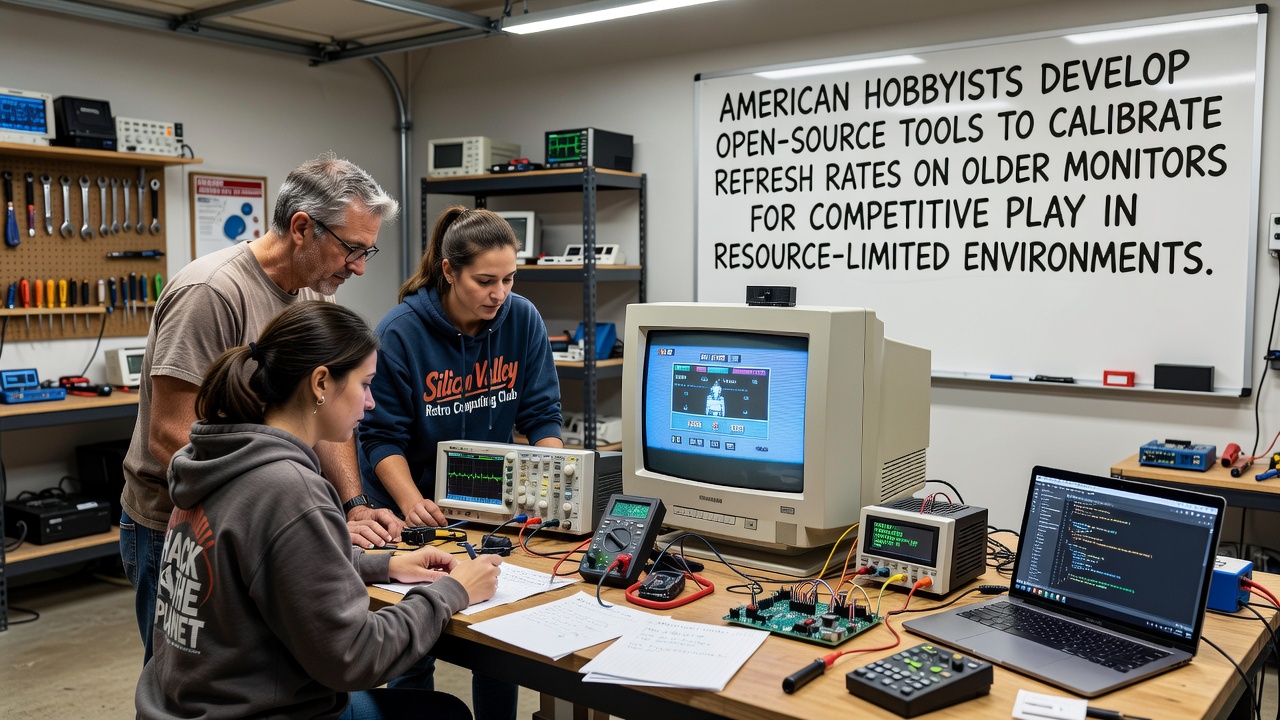
American hobbyists have turned to open-source development to address refresh rate inconsistencies on older monitors that remain common in competitive gaming setups where budgets restrict access to newer hardware, and these efforts gained momentum through shared code repositories that allow users to adjust vertical sync parameters and pixel clock timings without proprietary software. Data from university labs shows that many legacy displays operate at rates below their rated specifications when connected to modern graphics cards, which creates input lag issues during fast-paced esports titles, while the new tools focus on software-based overrides that bypass hardware limitations through custom driver patches and firmware tweaks.
Technical Foundations Behind the Calibration Tools
Refresh rate calibration involves measuring and adjusting the number of times a monitor redraws its image per second, and hobbyist groups have documented methods that use open-source libraries to detect actual output frequencies rather than relying on manufacturer claims. Researchers at institutions such as the University of Toronto have published findings on signal timing discrepancies in displays manufactured before 2015, noting that these panels often default to 60 Hz even when capable of higher rates under specific conditions, and the community tools incorporate algorithms that test multiple timing combinations to identify stable configurations. Observers note that participants in these projects frequently combine low-cost oscilloscopes with software scripts to verify results, which reduces reliance on expensive test equipment.
One case involved a group in the Midwest that released a utility allowing users to force 75 Hz and 85 Hz modes on CRT monitors originally rated at 60 Hz, and figures from their repository indicate over 2,000 downloads within the first quarter of availability. The software operates by editing EDID data through the operating system, which enables the graphics driver to recognize extended capabilities while maintaining stability across different connection types including VGA and DVI.
Adoption Patterns in Resource-Limited Environments
Competitive players operating with older equipment have integrated these utilities into training routines because they provide measurable reductions in perceived latency during matches, and reports from esports clubs highlight how such adjustments allow sustained performance without hardware upgrades. Data indicates that participants in resource-constrained settings often pair the calibration software with existing graphics card control panels to fine-tune overdrive settings, which helps minimize ghosting on LCD panels from the early 2010s. Those who have tested the tools report consistent frame delivery when the monitor refresh aligns closely with game engine outputs, although success depends on the specific panel model and cable quality.
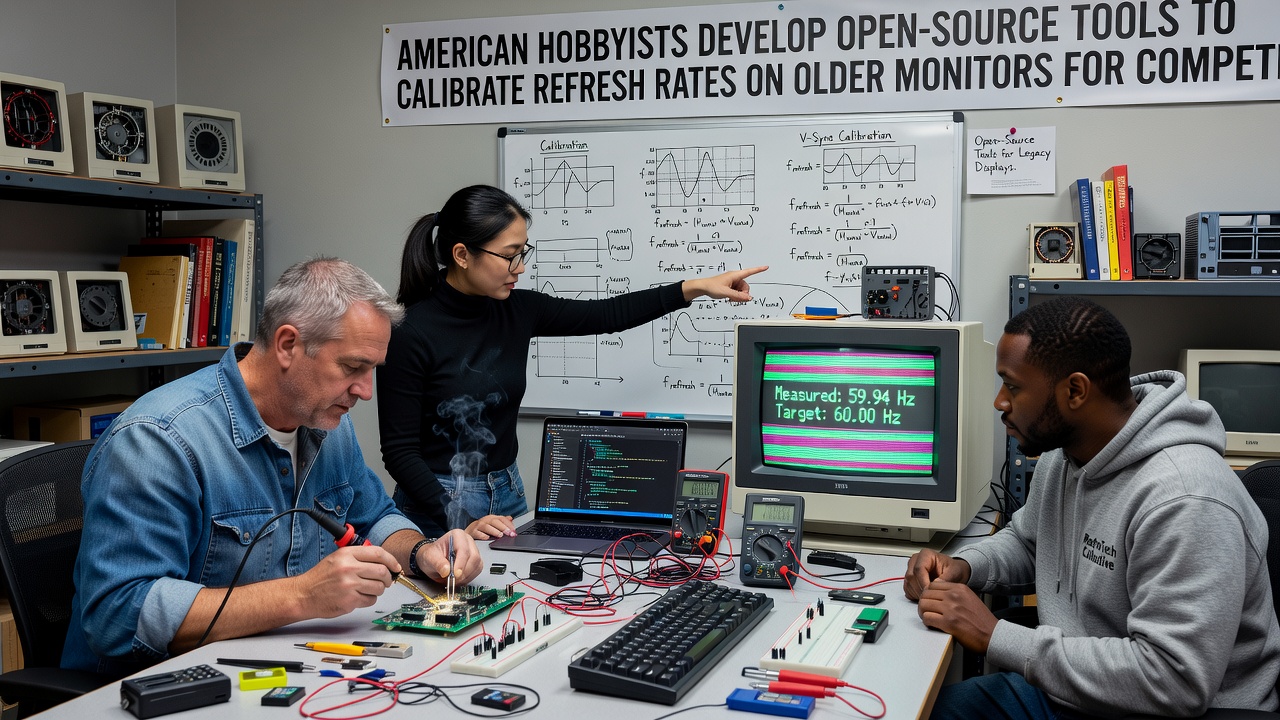
By September 2026 several regional networks had formed to test these utilities across multiple monitor brands, and the collaborative approach has produced updated version logs that document compatibility fixes for over 150 display models. Industry organizations including the IEEE Standards Association have referenced similar timing adjustment techniques in technical papers on display interoperability, which lends credibility to the hobbyist methods while providing additional validation benchmarks.
Challenges and Iterative Improvements
Developers face hurdles when older monitors lack sufficient bandwidth for higher refresh rates, yet the open-source nature of the projects allows rapid iteration based on user-submitted test results from across different regions. People working on the tools emphasize documentation of edge cases such as signal degradation over long cable runs, and they incorporate error-checking routines that alert users when a selected rate exceeds the panel's physical capabilities. Studies from the University of Melbourne on display signal integrity have supplied reference data that hobbyists adapt into their calibration scripts, which improves accuracy without requiring new hardware purchases.
Additional refinements include integration with existing open-source operating systems to automate timing detection at startup, and this reduces the manual steps needed for each session. Figures reveal that adoption rates increase in areas where replacement monitors remain scarce due to supply chain factors, which drives continued contributions to the shared codebases.
Conclusion
The development of these open-source calibration utilities demonstrates how targeted software solutions can extend the usability of legacy monitors within competitive gaming environments that operate under resource constraints. Continued contributions from hobbyist communities, supported by academic references and industry standards, sustain the expansion of compatible models and refinement of timing algorithms.